

- Contact Centre
- Employee Knowledge Sharing
- Service Desk
Case Study LBBD
How Knowledge Management Improved Operational Efficiency and Reduced Escalations
The Organisation
This case study features a large operational customer service department within London Borough of Barking and Dagenham Council, responsible for handling a complex range enquiries across multiple service areas.
The team operates as a frontline, multi-team function, dealing with high enquiry volumes where accuracy, speed, and consistency are critical. Like many enterprise and SME organisations, the team works in a remote and hybrid model, increasing reliance on systems rather than informal, in-person knowledge sharing.
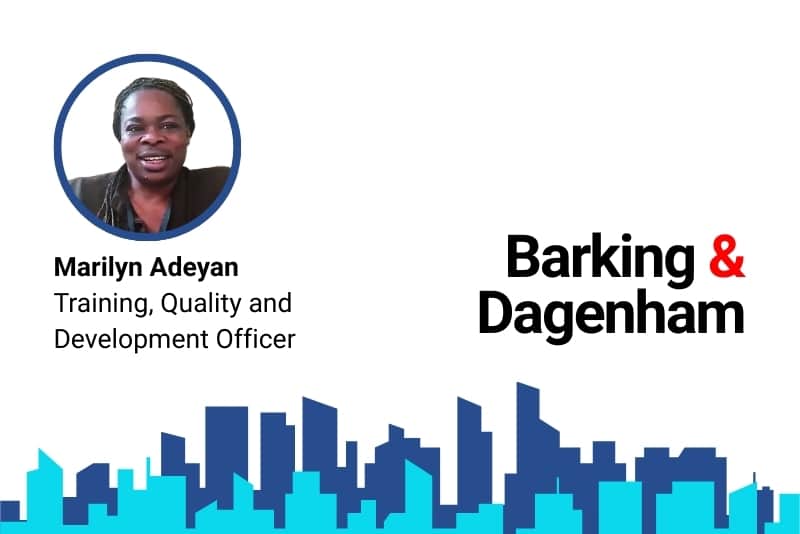
The project was led by Marilyn Adeyan, Training, Quality and Development Officer a senior manager responsible for customer service operations, onboarding, and training.
The Challenge
As the organisation grew more complex, knowledge became increasingly difficult to manage.
Information was spread across legacy systems, shared drives, and personal notes built up over time. New starters lacked confidence and context. Experienced staff became informal “go-to” people. Managers were regularly interrupted to answer simple routine questions.
“Information was isolated to people who had been with us a long time. New starters didn’t have that knowledge source.”
Marilyn Adeyan
Remote working amplified the issue. Without colleagues nearby, teams needed a trusted, searchable source of truth they could rely on during live calls and day-to-day work.
At the same time, the organisation operated in a highly regulated environment, where outdated or unclear guidance could lead to errors, rework, or compliance risk.
The Strategic Shift
Rather than treating this as a documentation problem, the organisation reframed it as an operational capability issue.
The goal was to enable teams to:
- Work independently without escalating routine process or factual questions to senior colleagues or managers
- Access accurate, up-to-date guidance on demand during call handling
- Onboard new starters faster without increasing management load
- Trust that information was current and correct, and improve the feedback loop to update process documents in real time
KPSOL was implemented as an operational knowledge platform, designed to support how teams want to work, not just store information.
The Results
Faster onboarding and reduced training effort
Training moved from being classroom-based to on-demand, multi-format learning. New starters could reinforce training through videos, documents, and guided content, reducing reliance on repeated explanations.
“It has shortened training time and allowed us to meet different learning styles.”
Marilyn Adeyan
Improved operational efficiency
Advisors now go directly to the knowledge base instead of asking colleagues or managers, for solutions during live customer calls.
This reduced internal back-and-forth and contributed to faster resolution times and improve customer satisfaction.
Reduced dependency on managers
Managers experienced fewer interruptions from frontline teams, freeing them up to focus on leadership and performance rather than firefighting.
Greater accuracy and trust
Clear, service-specific guidance improved confidence and consistency. Advisors could also flag incorrect or missing information, allowing rapid updates and reinforcing trust in the system.
“There’s more trust in the system because people know the information is accurate and kept up to date.”
Marilyn Adeyan
A behavioural shift around knowledge
Knowledge stopped being person-dependent and became a shared operational asset that everyone can contribute towards improving. This dramatically increased engagement and ownership.
“I don’t have to tell people to check the knowledge base anymore. They do it first.”
Marilyn Adeyan
Why This Matters for Transformation & Knowledge Leaders
This case demonstrates a common pattern across enterprise, SME and public organisations:
Knowledge challenges are rarely about content. They are about access, trust, and behaviour.
When knowledge is embedded into daily operations, organisations reduce bottlenecks, improve performance, and scale with confidence.
Choose the next step that best matches where you are in your knowledge strategy.
Where to Go Next
Choose the next step that best matches where you are in your knowledge strategy.
See how the Universal Knowledge platform works
See how teams cut search time, reduce escalations, and keep knowledge accurate, without adding management overhead.
View: Universal Knowledge overview
Validating governance & control
Learn how leading teams manage version control, ownership, and audit readiness as knowledge scales.
Read: Governance & Version Control Features
See the Product in action
If the challenges in this case study feel familiar, a short Universal Knowledge walkthrough is the fastest way to see how it could benefit your team.
Live Demo: Book a 10-minute demo